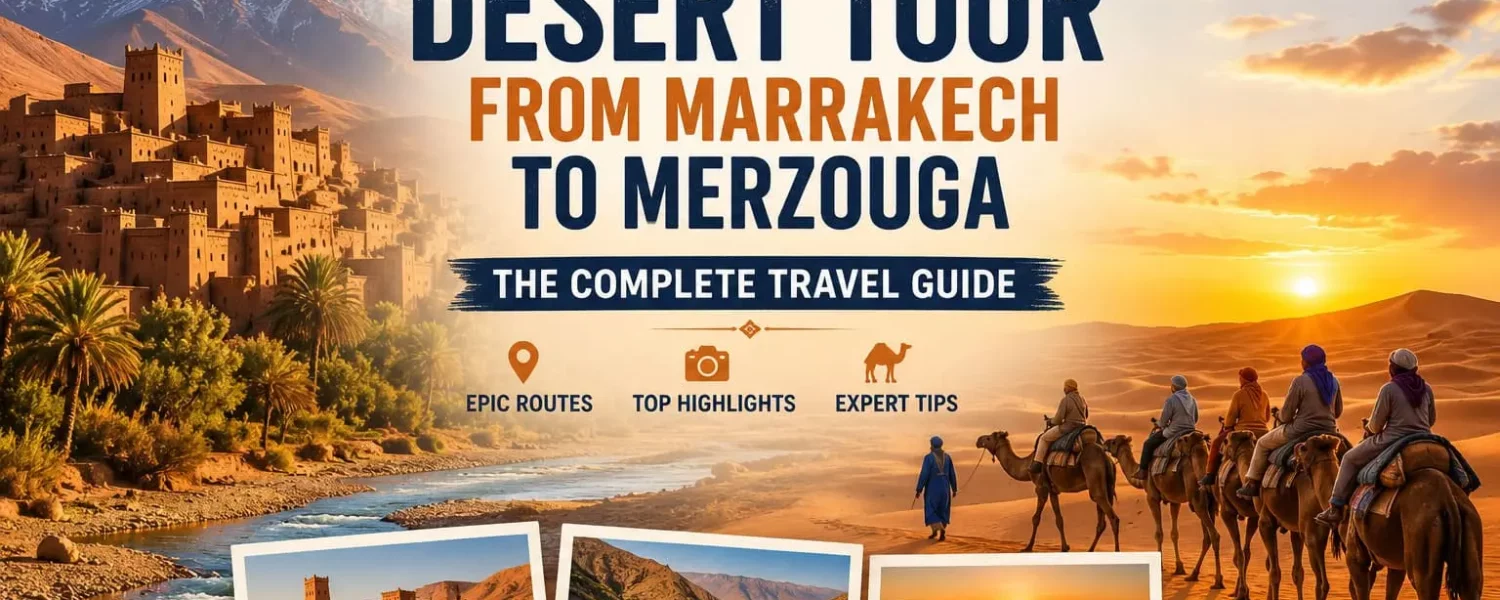
Some journeys stay with you long after the dust settles on your boots. The 3-day desert tour from Marrakech to Merzouga is one of them. In just three days you trade the pink ramparts of Marrakech for snow-dusted mountain passes, fortified mud-brick kasbahs, palm-filled gorges and finally the towering golden dunes of the Sahara at Erg Chebbi. It is, without exaggeration, Morocco’s most beloved desert adventure and the reason travelers from every continent keep adding Merzouga to their bucket lists.
Merzouga is a small Saharan village on the eastern edge of Morocco, famous for sitting at the foot of Erg Chebbi, a vast sea of wind-sculpted dunes that rise up to 150 metres above the desert floor. This is the Sahara of the imagination: rolling apricot-colored sand, camel caravans silhouetted against a burning sunset, and a night sky so crowded with stars it almost feels artificial. Reaching it from Marrakech is a road trip in itself, winding across the High Atlas Mountains and through landscapes that change dramatically with every hour.
At Asara Morocco Tours, a Berber-owned agency based in Marrakech, we have guided more than 900 desert journeys since 2014 and hold a 5.0-star rating from over 82 Tripadvisor reviews. We built this guide to give you everything you need to plan the trip with confidence: a day-by-day itinerary, honest advice on luxury versus standard camps, the best time to travel, a Sahara packing list, and answers to the questions first-time visitors ask most.
Whether you are a couple chasing a romantic night under the stars, a small group of friends, or a first-time visitor nervous about the logistics, this article walks you through the entire experience step by step. By the end you will understand exactly what the route looks like, what is included, what to pack, and how to choose a tour that delivers comfort and authenticity rather than a rushed, crowded ride. Let’s begin where every remarkable Moroccan adventure does: with the open road and the mountains ahead.
Table of Contents
Why Choose a 3-Day Desert Tour from Marrakech to Merzouga?
Overview of the Marrakech to Merzouga Route
Day 1 – Marrakech to Dades Valley
Day 2 – Dades Valley to Merzouga Desert
Top Attractions You Will Visit
What Is Included in a Typical 3-Day Desert Tour?
Luxury vs Standard Desert Camps
Best Time to Take a Marrakech to Merzouga Desert Tour
What to Pack for the Sahara Desert
Travel Tips for First-Time Visitors
Why Book with Asara Morocco Tours?
Other Popular Tours from Marrakech
Why Choose a 3-Day Desert Tour from Marrakech to Merzouga?
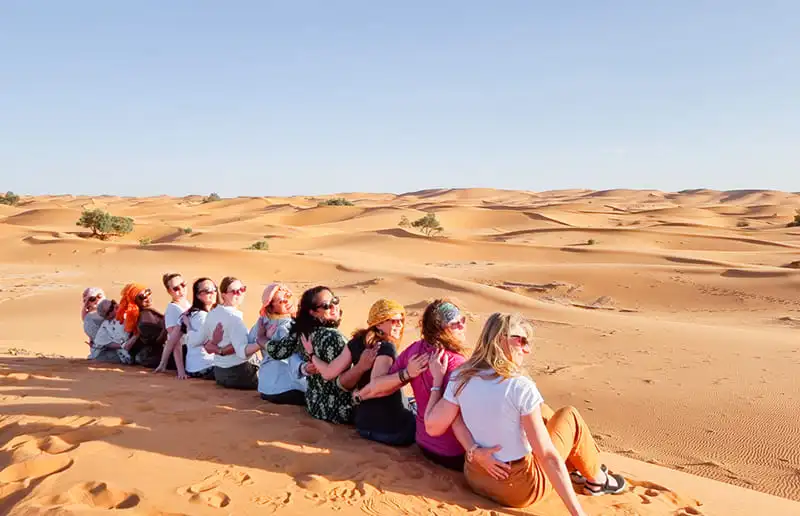
Plenty of desert excursions leave from Marrakech, but the 3-day desert tour from Marrakech to Merzouga has become the best option for good reason. It hits the sweet spot between time, cost, and depth of experience. Here’s why so many travellers choose it over shorter alternatives.
Unmatched popularity and proven appeal
This route is the single most requested itinerary in southern Morocco. Erg Chebbi near Merzouga is the country’s most iconic dune field, far larger and more dramatic than the smaller dunes around Zagora. When people picture a Sahara Desert tour from Marrakech, they are picturing Merzouga, even if they don’t yet know the name.
Incredible scenic diversity
Few road trips on earth pack in so much variety. In three days you cross the High Atlas Mountains, walk through the UNESCO-listed kasbah of Ait Ben Haddou, pass the film studios of Ouarzazate, follow the Valley of Roses, descend the dramatic Dades Valley, and hike beneath the soaring cliffs of Todra Gorge before the landscape finally opens into pure Saharan sand. Every few hours, the scenery completely resets.
Authentic cultural experiences
This is not just sightseeing from a car window. Along the way you meet Berber families, share mint tea, learn about nomadic life, and spend the night in a desert camp where Amazigh musicians drum around the fire. The Marrakech to Merzouga desert tour is as much a cultural immersion as it is a scenic one.
Genuine value for money
Because the route is well established, a private 3 Day Morocco desert tour delivers exceptional value: transport, accommodation, a camel trek, and most meals are bundled into one fair price. Compared with arranging each leg independently, a guided tour is almost always cheaper and far less stressful.
Why three days is the ideal length
Could you do Merzouga in two days? Technically, you could do it in two days, but you’d spend about twelve hours in a vehicle each day and have almost no time to enjoy the dunes. Could you spend a week? Absolutely, and many travellers do. But three days is the minimum that lets you reach Erg Chebbi without exhaustion, enjoy a full sunset and sunrise and overnight in the desert, and still return to Marrakech relaxed rather than wrecked. It is the most efficient way to experience the real Sahara.
| Tour length | What you realistically get |
| 1 day | No Merzouga. Only the nearer Agafay stony desert or a long drive with little payoff. |
| 2 days | Usually, Zagora’s smaller dunes are the destination, but reaching Merzouga requires a punishing drive. |
| 3 days | The sweet spot: Erg Chebbi, camel trek, sunset, overnight camp, and sunrise. |
| 4+ days | More gorges, valleys, and slower pacing for travelers who want extra depth. |
Overview of the Marrakech to Merzouga Route
Before we get into the day-by-day details, here’s an overview of the route. The 3-day desert tour from Marrakech to Merzouga follows a logical loop south-east from Marrakech to the dunes and back, covering roughly 1,000 kilometers of road in total. The table below summarizes each day, its route and its standout highlights.
| Day | Route | Highlights |
| Day 1 | Marrakech → Tizi n’Tichka → Ait Ben Haddou → Ouarzazate → Dades Valley | High Atlas Mountains, Tizi n’Tichka Pass, Ait Ben Haddou kasbah, Ouarzazate film studios, Valley of Roses, overnight in Dades Valley |
| Day 2 | Dades Valley → Todra Gorge → Erfoud → Merzouga | Todra Gorge cliffs, Berber villages, Erfoud fossils, camel trek into Erg Chebbi, Sahara sunset, overnight desert camp |
| Day 3 | Merzouga → Tinghir → Ouarzazate → Marrakech | Sunrise over the dunes, breakfast in the desert, scenic return across the Atlas, arrival back in Marrakech by evening |
Tip: the route is a loop on Day 1 and 2 and partly retraces on Day 3, which is why the dunes feel earned by the time you arrive.
Day 1 – Marrakech to Dades Valley
Your adventure begins early. After pickup from your riad or hotel, you leave Marrakech behind and head south-east toward the mountains. The first day is all about dramatic ascents, ancient kasbahs, and the slow transition from city to desert frontier.
Crossing the High Atlas Mountains
Within an hour the flat Haouz plain yields way to the foothills of the High Atlas, North Africa’s highest mountain range. The road climbs steadily past Berber villages clinging to terraced hillsides, walnut groves, and roadside stalls selling minerals and almonds. The air cools, the views widen, and the photographs start almost immediately.
Tizi n’Tichka Pass
The journey’s first showstopper is the Tizi n’Tichka Pass, which crests at 2,260 meters, making it the highest paved mountain pass in Morocco. The recently improved road snakes through switchbacks with sweeping panoramas at every turn. Your driver will pause at a viewpoint so you can stretch your legs, breathe the thin mountain air and take in the scale of the Atlas.
Ait Ben Haddou Kasbah
Descending the southern slopes, you reach Ait Ben Haddou, a fortified earthen village and UNESCO World Heritage Site. This honey-colored ksar of stacked kasbahs has appeared in countless films, from Gladiator to Game of Thrones. Cross the riverbed and climb the labyrinth of alleys to the granary at the top, where the view over the palm groves and Ounila Valley is unforgettable.
Ouarzazate
A short drive on lies Ouarzazate, nicknamed the gateway to the desert and the Hollywood of Morocco. Home to Atlas Studios and the Cinema Museum, it has doubled as ancient Rome, Tibet, and the Sahara on screen. Depending on timing, you may stop for lunch or a brief look at the studios before pressing on.
Valley of Roses
The route then threads along the Valley of Roses, a fertile ribbon of pink Damask roses famous for the rosewater and cosmetics produced here each spring. If you travel in April or May, the air is heavy with the scent of blossoms, and the annual Rose Festival may be in full swing.
Dades Valley
As the light softens, you arrive in the Dades Valley, your home for the night. The Dades River carved the valley, which is lined with crumbling kasbahs, almond orchards, and the famous twisting hairpin road that photographers adore. You check into a comfortable hotel or guesthouse, enjoy a hearty Moroccan dinner, and rest before the big push to the dunes tomorrow.
Practical insight: Day 1 involves around seven to eight hours of driving spread across the day, but the constant stops keep it enjoyable. Keep a light jacket handy, as evenings in the Dades Valley can be surprisingly cool, even in summer.
Day 2 – Dades Valley to Merzouga Desert
Day two is the emotional heart of the three day Marrakech to Merzouga desert tour. It ends with a camel trek into the Sahara and a night beneath the stars, a memory most travelers say they will never forget.
Todra Gorge
The morning opens at Todra Gorge, where sheer limestone walls rise up to 300 metres on either side of a narrow river canyon. Sunlight filters down between the cliffs, turning the rock gold and rose. You can walk along the canyon floor, watch rock climbers tackle the walls and feel genuinely small against the towering stone.
Berber villages
Beyond the gorge the road passes through a string of Berber villages and palm-fringed oases. These communities have farmed the same plots for generations, and your guide can explain the ingenious khettara irrigation channels and adobe architecture that let life flourish at the desert’s edge.
Erfoud
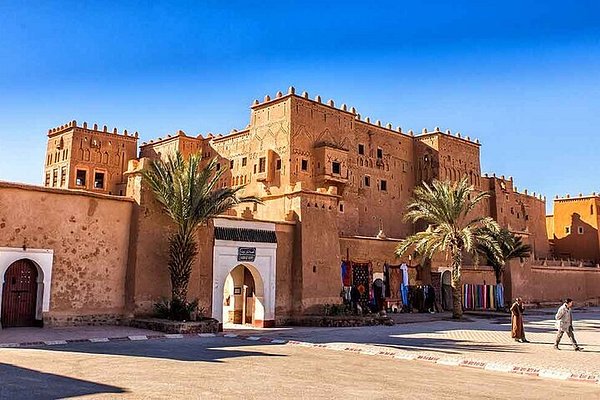
By early afternoon you reach Erfoud, a desert town renowned for date palms and marine fossils. Millions of years ago this region lay beneath an ocean, and today workshops cut and polish black fossil marble shot through with ancient ammonites. It is a popular and worthwhile stop for a souvenir with real geological history.
Arrival in Merzouga
Shortly after, the horizon shifts. A wall of golden dunes appears in the distance, shimmering in the heat. This is your first sight of Erg Chebbi and your arrival in Merzouga. You leave the larger vehicle, meet your camel team, and prepare for the trek that everyone has been waiting for.
Camel trekking experience
Camel trekking is the classic way to enter the Sahara, and yes, the tour includes it. Perched atop a calm, well-cared-for dromedary, you sway gently into the dunes in a single-file caravan as the sand glows amber around you. The ride to camp takes roughly an hour and is gentle enough for beginners, though those who prefer can often arrange a 4×4 transfer instead.
Sunset over Erg Chebbi dunes
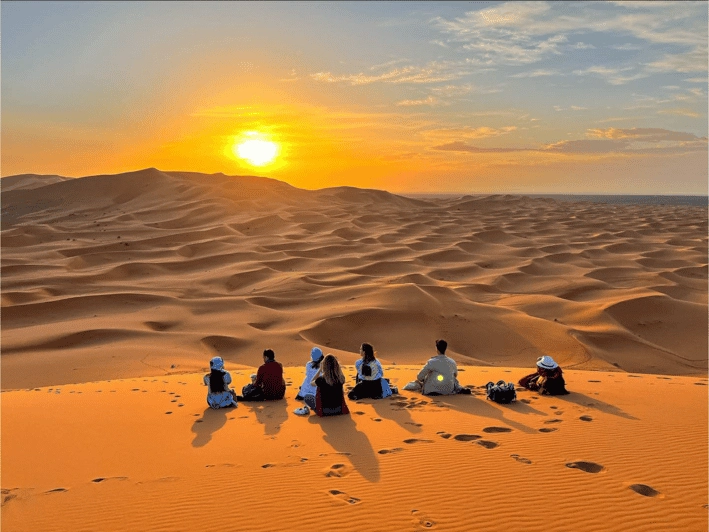
Halfway in, your guide stops on a high ridge to watch the sun melt into the dunes. The sand shifts from gold to copper to deep violet, the shadows stretch long and the silence is total. Climbing a nearby crest barefoot to watch the Sahara sunset over Erg Chebbi is, for many, the highlight of their entire Morocco trip.
Overnight luxury desert camp
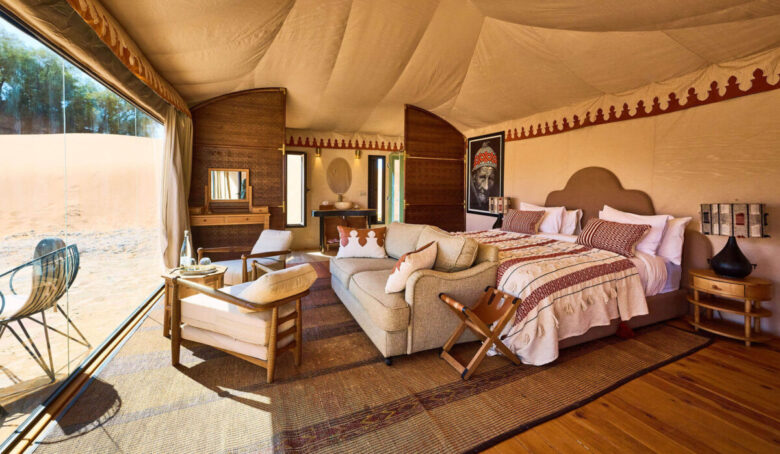
As darkness falls, you reach camp, a cluster of Berber tents nestled between the dunes. After a traditional tagine dinner, the team gathers around the fire for drumming and song. Then you step away from the light, lie back on the cool sand, and look up at a Milky Way so bright it casts a faint shadow. Whether you choose a standard or a luxury desert camp in Merzouga, sleeping in the heart of the Sahara is the experience that defines this tour.
Day 3 – Merzouga to Marrakech
The final day begins before dawn and ends back in the city, bookending your Merzouga desert experience with one last unforgettable sunrise.
Sahara sunrise
Your guide wakes you while the sky is still indigo. Climbing a dune in the half-light, you settle in to watch the sun lift over the eastern dunes, igniting the sand in pinks and golds. With cooler air and almost no other travelers around, sunrise over Erg Chebbi feels even more magical than sunset.
Breakfast in the desert
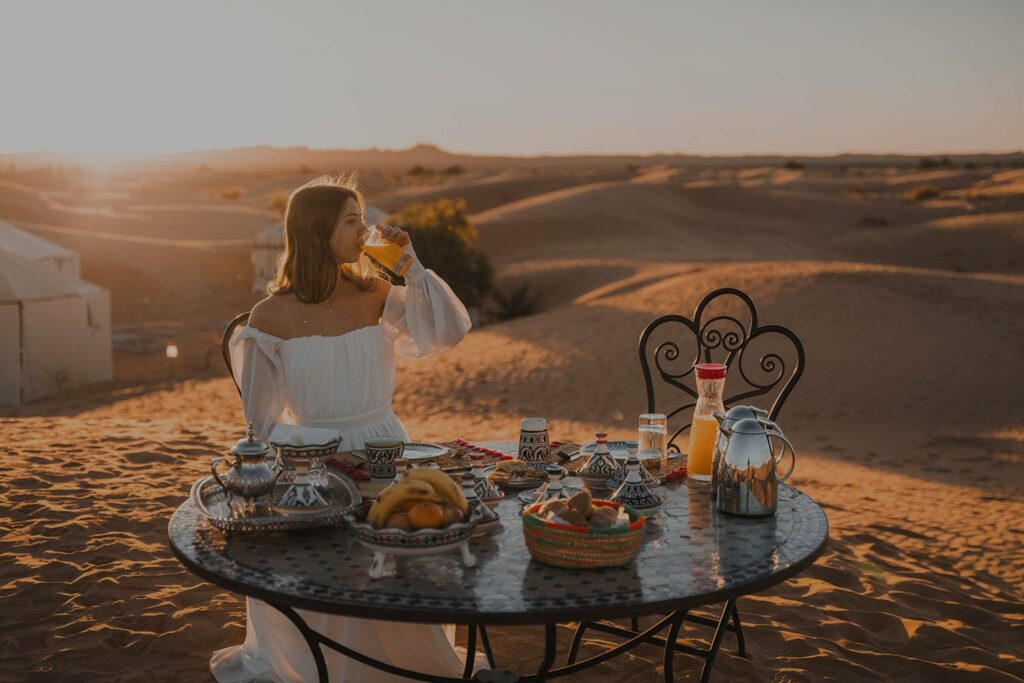
Back at camp a simple, satisfying breakfast awaits: msemen and bread, jam, eggs, and plenty of mint tea or coffee. Refueled, you mount your camel once more for the return trek across the dunes to Merzouga village, where your vehicle is waiting.
The return journey
The long drive back to Marrakech retraces much of the route in reverse, but the changed light and your new perspective make the scenery feel fresh. Your driver paces the day with comfort stops and a relaxed lunch break.
Scenic stops
Depending on time and your preferences, the return can include photo stops at Tinghir’s palm oasis, a different viewpoint on the Tizi n’Tichka, or a final look at Ouarzazate. This is your tour, so a skilled driver-guide will tailor the stops to what you most want to see.
Arrival in Marrakech
You roll back into Marrakech in the evening, usually between 7 and 8 pm, and are dropped at your accommodation. Tired, sun-kissed, and full of stories, you will already be planning your next Moroccan adventure. That is the lasting effect of a well-run Marrakech to Sahara desert tour.
Top Attractions You Will Visit
The route is studded with landmarks that would each justify a trip on their own. Here is a closer look at the highlights you will encounter, with the cultural and historical context that makes them sing.
High Atlas Mountains
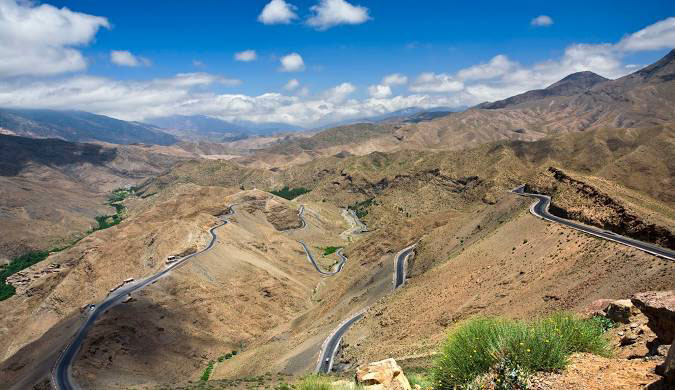
Stretching over 700 kilometers, the High Atlas form the backbone of Morocco and the traditional homeland of the Amazigh (Berber) people. Snow-capped in winter and dotted with terraced villages year-round, they create the dramatic barrier you cross on Day 1 between the lush north and the arid south.
Ait Ben Haddou
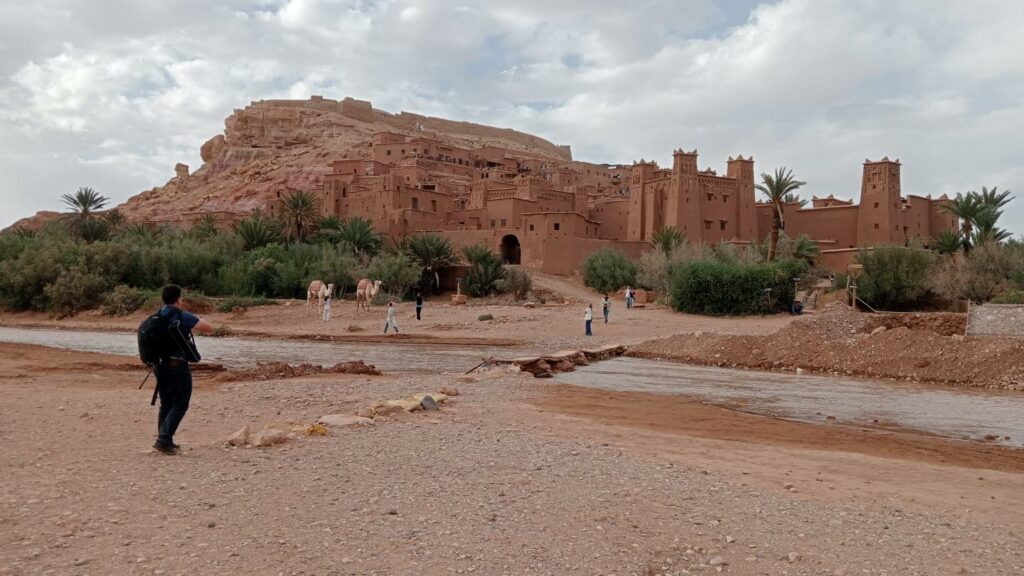
This fortified ksar dates back to at least the 17th century and once guarded a key caravan route between the Sahara and Marrakech. As a UNESCO World Heritage Site and beloved film location, it is the most spectacular example of southern Moroccan earthen architecture you will see anywhere.
Ouarzazate
Known as the door of the desert, Ouarzazate grew as a garrison and trading town and is now Morocco’s film capital. Atlas Studios is one of the largest film studios in the world by surface area, and the nearby Taourirt Kasbah offers a glimpse of pre-colonial Glaoui power.
Dades Valley
Famous for its rose-colored rock formations known as the Monkey Fingers and its hypnotic switchback road, the Dades Valley is a photographer’s dream. The valley floor is a green corridor of fig, almond, and walnut trees set against bare ochre hills.
Todra Gorge
Carved over millennia by the Todra River, this canyon narrows to just ten meters wide in places while its walls soar 300 meters overhead. It is one of North Africa’s premier rock-climbing destinations and a refreshingly cool stop on a hot day.
Erfoud
Gateway to the dunes and capital of Moroccan dates, Erfoud is also a center for fossil quarrying. Each October the town celebrates the Date Festival, and its workshops are the best place to buy polished fossil marble straight from the source.
Merzouga
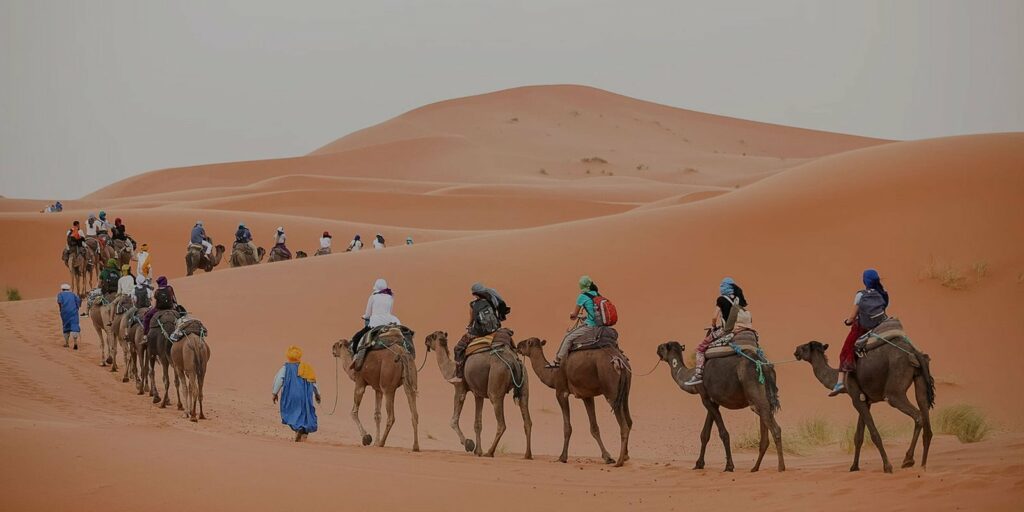
This Saharan village is the launch pad for every dune adventure in Erg Chebbi. Beyond the dunes, the area is home to nomadic families, a seasonal salt lake that attracts flamingos, and the famous Gnaoua musicians of nearby Khamlia.
Erg Chebbi Dunes
The undisputed star of the show, Erg Chebbi is a 28-kilometre-long, 5-kilometre-wide sea of dunes reaching 150 metres at their highest. Constantly reshaped by the wind, these are the quintessential Sahara Desert Morocco landscapes that draw visitors from around the world.
What’s included in a typical 3-day desert tour?
Inclusions vary between operators, so always read the fine print before booking. The table below reflects what a typical, well-run private 3-day desert tour from Marrakech to Merzouga with Asara Morocco Tours covers and what usually is not included in the price.
| Included | Not included |
| Private air-conditioned vehicle and fuel | International and domestic flights |
| Experienced English-speaking driver-guide | Travel insurance |
| Hotel/riad pickup and drop-off in Marrakech | Lunches (typically paid individually) |
| One night in a Dades Valley hotel or guesthouse | Drinks, snacks and bottled water beyond camp |
| One night in a Merzouga desert camp | Entrance fees to optional sites (e.g. studios) |
| Camel trek into Erg Chebbi (both ways) | Tips for your guide and camel team (optional) |
| Breakfast and dinner on camp/hotel nights | Personal shopping and souvenirs |
| Sunset and sunrise over the dunes | Activities not listed in your itinerary |
Because Asara Morocco Tours runs private departures, the itinerary is flexible: you can upgrade your camp, add nights, or adjust stops. Always confirm exactly which meals and which camp category you will receive when you book your Merzouga desert tour from Marrakech.
Luxury vs Standard Desert Camps
One of the biggest decisions you will make is which type of desert camp to book. Both put you in the heart of the Sahara, but the comfort level differs significantly. Use the comparison below to decide what suits your budget and expectations.
| Feature | Standard camp | Luxury desert camp |
| Accommodation | Simple Berber tents with basic beds and blankets | Spacious tents with real beds, quality linens and rugs |
| Bathrooms | Shared facilities, sometimes basic | Private en-suite tents with hot showers and flushing toilets |
| Dining | Communal tagine dinner and breakfast | Multi-course meals, often with table service and more variety |
| Comfort | Authentic and rustic; cooler nights felt more | Heating/insulation, lounge areas and extra amenities |
| Photography | Excellent dune access; fewer staged settings | Excellent dune access plus styled, photogenic interiors |
| Pricing | Most affordable option | Higher price, typically a worthwhile upgrade for comfort |
Our honest recommendation: if your budget allows, upgrade to a luxury desert camp in Merzouga, especially for couples or anyone who values a private bathroom and a proper bed. If you are traveling on a tighter budget or chasing the most rugged, authentic feel, a clean standard camp still delivers the same unforgettable dunes and star-filled sky. Asara Morocco Tours offers both and will help you pick the right fit.
How Much Does a 3-Day Desert Tour from Marrakech to Merzouga Cost?
Price is naturally one of the first questions travelers ask, and the honest answer is it depends. A 3-day desert tour from Marrakech to Merzouga is priced per tour rather than as a fixed ticket, so the final cost per person changes with your group size, the camp category you choose, and the season you travel. Because Asara Morocco Tours runs private departures, you never share your vehicle with strangers, and the per-person price falls as your group grows.
The table below shows indicative per-person ranges for a private 3-day tour. Use it as a planning guide; for an exact, up-to-date quote tailored to your dates and group, message us directly, and we will confirm the price in minutes.
| Group size (private tour) | Standard camp (per person) | Luxury camp (per person) |
| 2 travellers | from €170–220 | from €230–300 |
| 3–4 travellers | from €140–180 | from €190–250 |
| 5–6 travellers | from €120–160 | from €160–210 |
| 7+ travellers | Contact us for group rates | Contact us for group rates |
Figures are indicative and for planning only; your final quote depends on dates, exact group size and chosen camp. Contact us for confirmed pricing.
What affects the price?
- Group size. The cost of a private vehicle and driver is shared across your group, so larger groups pay less per person.
- Camp category. A luxury desert camp with en-suite bathrooms and upgraded dining costs more than a standard Berber camp.
- Peak spring and autumn dates can be priced higher than the quieter summer and deep-winter months.
- Private vs shared. All Asara tours are private; a shared group tour would be cheaper but far less flexible and comfortable.
- Add-ons. Extras such as an additional desert night, sandboarding, a quad-bike ride or upgraded hotels add to the base price.
- Pickup point. Standard pickup is anywhere in central Marrakech; pickups from outside the city may carry a small surcharge.
Remember that the headline price already bundles your private transport, accommodation, camel trek and most meals, so a guided 3-day desert tour from Marrakech to Merzouga is almost always cheaper and far less stressful than booking each leg yourself. For the full breakdown of what your money covers, see the inclusions table above.
| Want an exact price for your dates? Tell us your travel dates, group size and preferred camp, and Asara Morocco Tours will send a confirmed, no-obligation quote. WhatsApp +212 718 785 883 or email asaramoroccotours@gmail.com. |
Best Time to Take a Marrakech to Merzouga Desert Tour
The Sahara is a place of extremes, so timing matters. The good news is that the Marrakech to Merzouga desert tour runs year-round; you simply pack and plan according to the season. Here is what to expect.
Spring (March–May)
This is the most popular window, and for good reason. Days are warm but comfortable, nights are mild, and the Valley of Roses is in bloom. Book ahead, as this is peak season.
Summer (June–August)
Hot, with desert daytime temperatures often soaring above 40°C. Tours still run, but activities shift to early morning and evening. Nights remain pleasant and prices can be lower. Bring serious sun protection and stay hydrated.
Autumn (September–November)
It’s arguably the best overall season, along with spring. The fierce summer heat fades, skies stay clear, and the dunes glow beautifully. Comfortable days and cool, starry nights make autumn ideal for first-time visitors.
Winter (December–February)
Crisp, sunny days and genuinely cold nights, sometimes near freezing in the desert and with snow on the Atlas passes. A magical, quieter time to travel if you pack warm layers for the camp.
| Season | Daytime | Night | Best for |
| Spring | 22–30°C | 8–15°C | Roses in bloom, balanced comfort, photography |
| Summer | 35–45°C | 18–25°C | Lower prices, fewer crowds, heat-tolerant travellers |
| Autumn | 24–32°C | 10–16°C | Clear skies, ideal all-round conditions |
| Winter | 15–22°C | 0–6°C | Quiet dunes, dramatic light, snow on the Atlas |
What to Pack for the Sahara Desert
Packing well makes the difference between a comfortable trip and a chilly, sunburnt one. You don’t need much for a 3-day desert tour from Marrakech to Merzouga, but a few essentials are non-negotiable. Use this checklist before your departure.
- Layered clothing: light, breathable items for the day and warm layers for cold desert nights
- A scarf or chèche to protect against sun, wind and blowing sand
- Comfortable closed shoes for walking, plus sandals for camp
- High-SPF sunscreen, lip balm and a wide-brimmed hat
- Sunglasses with good UV protection
- A small daypack for the camel trek and overnight essentials
- Reusable water bottle and any personal snacks
- Power bank and charging cables (camp electricity can be limited)
- Headlamp or small torch for moving around camp at night
- Basic toiletries and any personal medication
- A light jacket or fleece, even in summer
- Cash in Moroccan dirham for tips, drinks and souvenirs
- Camera or phone with plenty of storage for those dune shots
Pack light overall: you only carry a small bag into the camp while your main luggage stays securely in the vehicle. Layers are the golden rule of the Sahara, where the temperature can swing more than 20 degrees between midday and midnight.
Travel Tips for First-Time Visitors
A little local knowledge goes a long way. These practical tips help first-time visitors get the most from their Merzouga desert experience and avoid the common pitfalls.
Currency. Morocco uses the dirham (MAD), a closed currency you exchange on arrival. Carry small notes for tips, roadside stops and souvenirs, as card payments are rare in the desert and rural towns.
Clothing. Dress modestly and comfortably, particularly in villages. Loose, breathable fabrics keep you cool by day, and a scarf doubles as sun protection and a sand shield. Always pack a warm layer for the night.
Photography. The light at sunrise and sunset is unbeatable, so keep your camera charged and within reach. Always ask permission before photographing local people, and respect anyone who declines.
Internet. Buy a local SIM (Maroc Telecom, Orange, or Inwi) in Marrakech for cheap, reliable data. Signal fades in the deep desert, so embrace being briefly offline at camp; it is part of the magic.
Safety. Morocco is a welcoming, safe destination for tourists, including solo travelers and couples. Use a reputable operator, keep valuables close in busy souks, and follow your guide’s advice in the desert.
Local culture. A few words of Arabic or Berber can be very helpful, and a smile is even more appreciated. Tipping is customary for guides, drivers, and camp staff. Embrace the slower pace, accept the mint tea, and engage warmly with the people you meet.
Why Book with Asara Morocco Tours?
The quality of your desert tour depends almost entirely on who runs it. A great operator turns a long drive into a seamless adventure; a poor one turns it into a crowded, rushed ordeal. Here’s why thousands of travellers trust Asara Morocco Tours for their Sahara journey.
- Authentic local expertise. We are a Berber-owned agency based in Marrakech, founded in 2014. The desert is our home, not just a route we sell, and our local knowledge is evident at every stop.
- Private, tailored tours. Your tour is yours alone. No strangers, no fixed group pace; just you, your travel companions, and a driver-guide who adapts the day to your wishes.
- Professional, friendly drivers. Our experienced English-speaking driver-guides are safe on the mountain roads and full of stories, history, and recommendations along the way.
- Genuinely authentic experiences. From Berber family visits to Gnaoua music at camp, we connect you with real Moroccan culture rather than staged tourist set-pieces.
- Flexible itineraries. Want an extra night in the dunes, a detour, or a slower pace? Just ask. We build the trip around you.
- Quality accommodations. We hand-pick our hotels and desert camps, with both standard and luxury options so you sleep well wherever you stay.
- Responsive customer support. From your first message to your safe return, we are reachable and ready to help, with a proven track record of more than 900 tours and a 5.0-star rating from over 82 Tripadvisor reviews.
| Ready to see the Sahara for yourself? Book your private 3-day desert tour from Marrakech to Merzouga with Asara Morocco Tours today. Message us on WhatsApp at +212 718 785 883 or email asaramoroccotours@gmail.com, and let’s plan your unforgettable Sahara adventure. |
View full tour details and book the 3-day Marrakech to Merzouga desert tour
Other Popular Tours from Marrakech
If three days doesn’t quite fit your plans or you want to explore more of Morocco, here are some of our most loved alternatives. Each links straight to its booking page so you can compare and choose.
Best for travelers who want a slower pace and more dune time: our 4-day Marrakech to Merzouga desert tour adds a second desert night and extra valleys, ideal if you would rather savor the journey than rush it.
Short on time but still craving the Sahara? The 2-day desert trip from Marrakech to Zagora delivers dunes, a camel ride and a desert night in just two days, perfect for travellers on a tight schedule.
Not sure which route suits you? Browse our full collection of Morocco tours from Marrakech to compare desert tours, day trips and multi-day itineraries side by side.
And of course, the flagship experience this guide is built around remains our 3-day desert tour from Marrakech to Merzouga : the best-balanced way to reach Erg Chebbi, ride a camel into the dunes and sleep beneath the Saharan stars.
Frequently Asked Questions
Is a 3-day desert tour from Marrakech worth it?
Absolutely. Three days is the minimum needed to reach the towering Erg Chebbi dunes near Merzouga, enjoy a camel trek, and experience both sunset and sunrise in the Sahara without spending every hour in the car. For most travelers, it is the single most memorable part of their Morocco trip and outstanding value for the experience delivered.
How long is the drive from Marrakech to Merzouga?
The one-way distance is around 560 kilometers and takes roughly 8 to 9 hours of pure driving. That is why the journey is split over two days with frequent scenic stops, so you arrive at the dunes relaxed rather than exhausted.
Can children join the tour?
Yes. The Marrakech to Merzouga desert tour is family-friendly and a wonderful adventure for kids. Because Asara Morocco Tours runs private departures, the pace can be adjusted for younger travelers, and a 4×4 transfer can replace the camel ride for very small children if preferred.
Are luxury camps available?
Yes. We offer both standard and luxury desert camps in Merzouga. Luxury camps feature private en-suite bathrooms with hot showers, real beds, quality linens, and multi-course dining, while standard camps offer a simpler, more rustic, but equally authentic night under the stars.
Is camel trekking included?
Yes, a camel trek into the Erg Chebbi dunes is included, both into the camp at sunset and back to Merzouga in the morning. The ride is gentle and beginner-friendly, and a 4×4 transfer can be arranged for anyone who prefers not to ride.
What should I wear in the desert?
Wear light, breathable, modest clothing during the day and bring warm layers for the cold desert nights. A scarf for sun and sand, comfortable closed shoes, sunglasses, and a hat are all strongly recommended. Even in summer, you should pack a fleece or light jacket for the evening.
Is Merzouga safe?
Yes. Merzouga and the wider Sahara region are very safe for tourists, including couples and solo travelers. Traveling with a reputable, licensed operator like Asara Morocco Tours ensures experienced guides, safe vehicles, and reliable logistics throughout.
What is the best month to visit?
The most comfortable months are March to May and September to November, when daytime temperatures are pleasant and nights are mild. Summer is hot but cheaper and quieter, while winter offers crisp days, cold nights and dramatic light.
How cold is the desert at night?
It varies by season. Summer nights are mild at around 18 to 25°C, spring and autumn nights are cool at roughly 8 to 16°C, and winter nights can drop to near freezing. Camps provide blankets, but you should always pack warm layers.
Can vegetarians join the tour?
Yes, easily. Moroccan cuisine is naturally vegetarian-friendly, with vegetable tagines, couscous, salads, and fresh bread. Simply let us know your dietary needs when booking and we will arrange suitable meals at every stop, including vegan and other requirements.
Do I need a 4×4 vehicle for the tour?
Not for the main route, which is fully paved. Most tours use a comfortable air-conditioned minivan or SUV. A 4×4 is only used for the short stretch of soft sand near the camp if you choose a vehicle transfer instead of the camel trek.
What is the WiFi and phone signal like?
Towns along the route have decent mobile coverage, and a local SIM gives you cheap data. In the deep desert and at camp, signal is weak or absent, so plan to be briefly offline and enjoy the digital detox.
How much should I tip on a desert tour?
Tipping is customary but discretionary in Morocco. As a rough guide, many travellers tip their driver-guide and the camp team a modest amount each day. Tip what feels fair for the service you receive; it is always appreciated.
Can the itinerary be customized?
Yes. Because all Asara Morocco Tours departures are private, you can add desert nights, adjust stops, upgrade your camp or change the pace. Just tell us what you would like and we will build the tour around your preferences.
How far in advance should I book?
We recommend booking at least two to four weeks ahead and earlier for peak spring and autumn dates or large groups. Last-minute bookings are sometimes possible, but early reservations secure the best camps and your preferred dates.
Final Thoughts
There are few travel experiences as complete as the 3-day from Marrakech to Merzouga desert tour. In just three days you witness the full sweep of southern Morocco: the soaring High Atlas Mountains, the ancient kasbahs of Ait Ben Haddou and the Dades Valley, the dramatic walls of Todra Gorge, and finally, the golden ocean of Erg Chebbi. You ride a camel into the dunes, watch the sun rise and set over the Sahara, and fall asleep beneath one of the clearest night skies on earth.
It is this combination, the scenery, the culture, the camel trek, and the unforgettable night in the desert, that makes the Marrakech to Merzouga desert tour Morocco’s most popular Sahara experience. Shorter trips can’t reach these dunes, and longer ones aren’t always necessary; three days is the sweet spot that delivers the real Sahara without the exhaustion.
The single biggest factor in how much you enjoy the journey is the team behind it. With Asara Morocco Tours you travel with a Berber-owned agency that knows the desert intimately, runs private and flexible itineraries, and has earned a 5.0-star rating from over 82 Tripadvisor reviews across more than 900 guided tours since 2014. We handle the logistics so you can focus on the magic.
Your Sahara adventure is closer than you think. Whether you dream of a romantic luxury camp under the stars, a family expedition, or a first solo trip into the dunes, we will craft the perfect desert tour from Marrakech to Merzouga for you.
| Start your journey today. Contact Asara Morocco Tours on WhatsApp at +212 718 785 883 or email asaramoroccotours@gmail.com to book your 3-day desert tour from Marrakech to Merzouga. The dunes of Erg Chebbi are waiting. |